Responsible Tourism
Protecting Sri Lanka's Natural Heritage Through Visitor Education
Protecting Sri Lanka's Natural Heritage Through Visitor Education
Bridging the gap between visitors and conservation through accessible education
Sri Lanka is recognised globally as one of the world's most important biodiversity hotspots, with exceptionally high levels of endemism across its flora and fauna. This natural wealth, combined with the island's rich cultural and archaeological heritage, makes Sri Lanka a highly attractive destination for international visitors. However, increasing tourism—particularly nature-based tourism—also brings growing pressure on ecosystems, wildlife, and protected areas, often driven by a lack of awareness rather than deliberate harm.
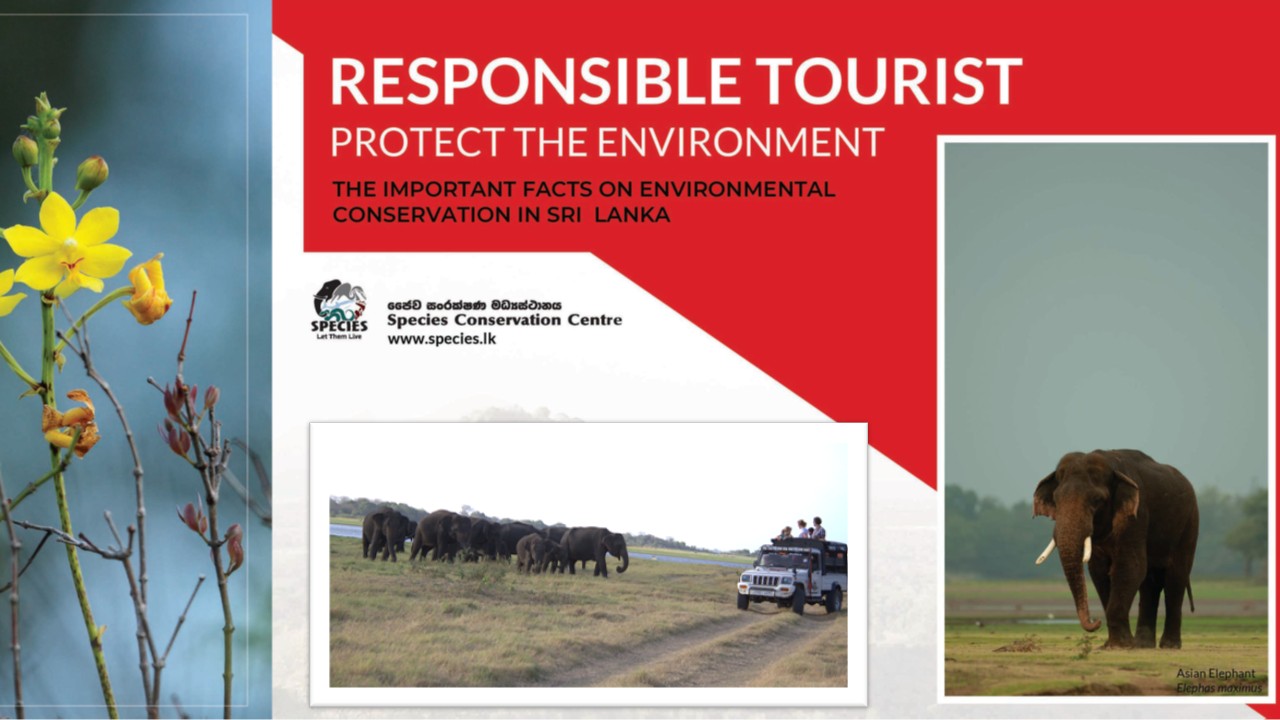
The Responsible Tourism for Environmental Protection initiative is an ongoing project led by the Species Conservation Centre to address this challenge through clear, accessible visitor education. The project centres on the design and dissemination of a concise, easy-to-understand brochure that provides tourists with essential information on Sri Lanka's environmental laws, conservation values, and responsible travel practices. By ensuring visitors are informed from the moment they arrive in the country, the project aims to reduce unintentional environmental damage and prevent illegal activities linked to misinformation or misunderstanding.
Providing clear guidance on Sri Lanka's environmental laws so visitors understand what is permitted and prohibited during their stay.
Raising awareness about the unauthorised collection of biological material and indigenous knowledge to protect Sri Lanka's endemic species.
Developing educational brochures in six major international languages for strategic distribution at key arrival points.
Helping visitors avoid unintentional environmental offences
Many environmental offences committed by visitors—such as collecting plants, animals, shells, fossils, or other biological materials—occur without malicious intent. Tourists are often unaware that all native flora and fauna in Sri Lanka are legally protected under national legislation, including the Fauna and Flora Protection Ordinance and the Forest Conservation Ordinance. Even seemingly harmless actions, such as removing plant material or possessing dead or inanimate biological specimens, can result in serious legal consequences.
The brochure provides visitors with clear guidance on what is permitted and prohibited, helping them avoid activities that could lead to fines, legal proceedings, or the unintentional exploitation of Sri Lanka's biological resources. In doing so, the initiative protects both biodiversity and visitors, ensuring that travel experiences are positive, lawful, and aligned with conservation objectives.
All native species are legally protected under the Fauna and Flora Protection Ordinance.
The Forest Conservation Ordinance prohibits removal of any biological material from protected areas.
Clear information on what is permitted and prohibited to prevent unintentional legal violations.
Protecting Sri Lanka's unique biodiversity from unauthorised exploitation
A key focus of the project is raising awareness about bio-piracy, a growing threat to Sri Lanka's unique biodiversity. Bio-piracy involves the unauthorised collection and use of biological material or indigenous knowledge for commercial or research purposes without consent or benefit-sharing. Sri Lanka has recorded increasing incidents of both organised and opportunistic bio-piracy, particularly involving endemic plants, amphibians, reptiles, and invertebrates.
By explaining the concept of bio-piracy in simple terms and outlining its ecological and legal implications, the brochure helps visitors understand why strict protections exist and why compliance matters. This educational approach supports national conservation efforts by reducing demand for illegal collection and reinforcing respect for Sri Lanka's natural heritage.
Endemic plants, amphibians, reptiles, and invertebrates are primary targets of bio-piracy activities.
Increasing incidents of both organised and opportunistic bio-piracy threaten Sri Lanka's biodiversity.
Explaining bio-piracy in simple terms to reduce demand for illegal collection through understanding.
Ensuring conservation messages reach every visitor
To maximise effectiveness, the brochure is being developed in six major international languages, reflecting the linguistic profile of the majority of visitors to Sri Lanka. This multilingual approach ensures that key messages are accessible to a broad audience, reducing reliance on informal or misleading sources of information.
Distribution is a central component of the project design. SCC is working toward strategic placement of the brochure at key points of arrival, including international flights and airport facilities, so that visitors receive this information at the very start of their journey. By integrating responsible tourism guidance into the arrival experience, the project embeds conservation awareness as a normal and expected part of travel in Sri Lanka.
Strategic placement at international airport facilities and arrival points.
Brochures developed in major international languages for broad accessibility.
Working to provide information on international flights bound for Sri Lanka.
The Responsible Tourism for Environmental Protection project contributes to a broader vision of tourism that supports conservation rather than undermines it. By empowering visitors with knowledge, the initiative encourages respectful behaviour, legal compliance, and a deeper appreciation of Sri Lanka's ecosystems and cultural heritage. Over time, this approach is expected to reduce environmental offences, limit biodiversity loss linked to tourism, and strengthen the country's reputation as a destination committed to sustainable and responsible travel.
Through this ongoing initiative, SCC is demonstrating how simple, well-designed information tools can play a powerful role in conservation—bridging the gap between visitors and the laws, values, and ecosystems that protect Sri Lanka's natural wealth.