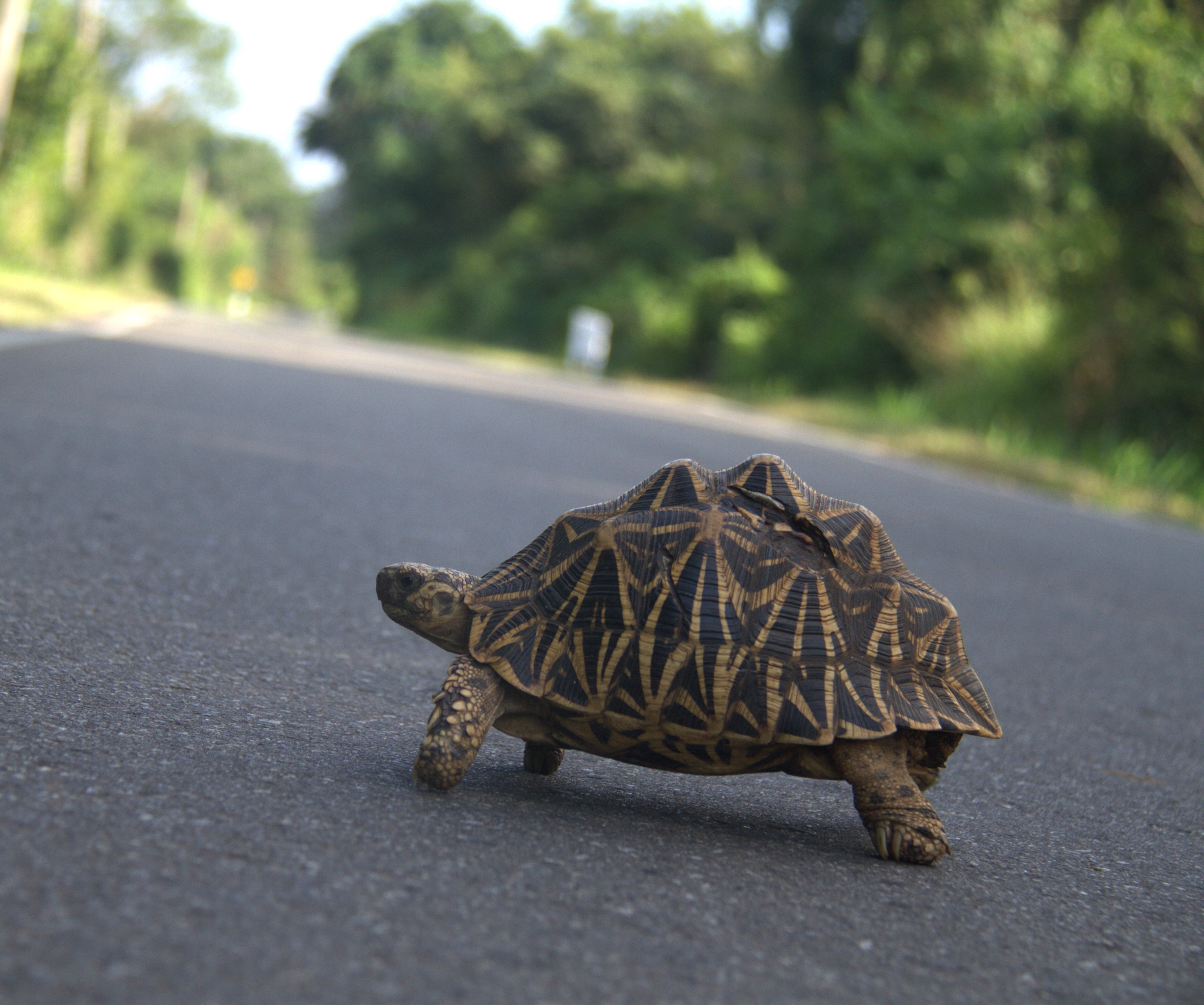
Safe Roads, Wild Lives
Wildlife Roadkill Mitigation through Road Signage
Wildlife Roadkill Mitigation through Road Signage
A practical, cost-effective initiative to protect Sri Lanka's wildlife on our roads
Sri Lanka's expanding road network increasingly intersects with forests, national parks, wildlife corridors, and other ecologically sensitive landscapes. As habitats become fragmented, animals are forced to cross roads to access food, water, and breeding areas, placing them at serious risk of vehicle collisions. Wildlife roadkill is now recognised as a significant threat to biodiversity in Sri Lanka, affecting a wide range of species including mammals, reptiles, amphibians, and birds. Many of these incidents occur at night, when visibility is low and nocturnal species are most active, increasing danger for both wildlife and road users.
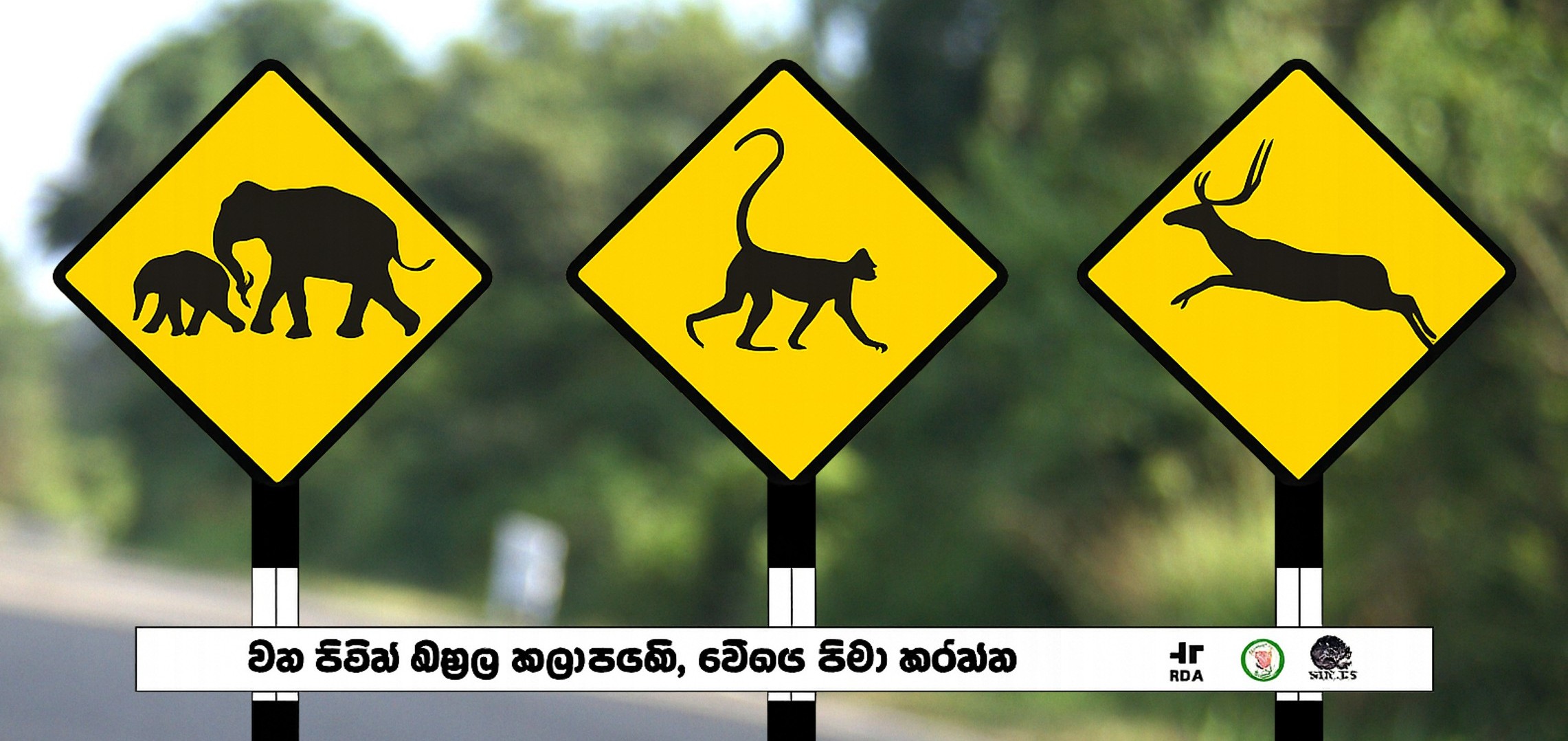
The Wildlife Roadkill Mitigation through Road Signage project is an ongoing initiative led by the SCC to address this growing problem through a practical, cost-effective, and immediately deployable solution. The project focuses on identifying high-risk wildlife crossing points along roads that border or pass through national parks, sanctuaries, and key habitats, and installing clearly designed, standardised wildlife warning signs at these locations. These signs alert drivers to the presence of animals, encourage reduced speeds in high-risk zones, and highlight species known to occur in the surrounding area.
Guided by field observations, existing research on animal movement patterns, and local knowledge to ensure signage is placed where it can have the greatest impact.
All signs are designed in line with nationally approved road and traffic standards, making them recognisable, legible, and appropriate for Sri Lanka's road infrastructure.
By focusing on driver awareness and behaviour change, the project applies one of the most globally recognised approaches to reducing wildlife road mortality.
Ongoing monitoring and periodic assessments evaluate effectiveness, refine sign placement, and build an evidence base for future mitigation efforts.
Site selection is guided by field observations, existing research on animal movement patterns, and local knowledge, ensuring that signage is placed where it can have the greatest impact. All signs are designed in line with nationally approved road and traffic standards, making them recognisable, legible, and appropriate for integration into Sri Lanka's existing road infrastructure. By focusing on driver awareness and behaviour change, the project applies one of the most globally recognised and feasible approaches to reducing wildlife road mortality, particularly in contexts where large-scale infrastructure solutions such as underpasses or overpasses are not yet viable.
Documenting our efforts to make Sri Lanka's roads safer for wildlife
Building a culture of safe driving in wildlife areas
Beyond physical installations, the initiative incorporates public awareness and education components to reinforce the importance of safe driving in wildlife areas. Information materials, outreach activities, and collaboration with relevant authorities help ensure that drivers understand why these signs matter and how small changes in driving behaviour can save lives.
Ongoing monitoring and periodic assessments are used to evaluate effectiveness, refine sign placement, and build an evidence base that can inform future mitigation efforts and policy discussions.
Information materials and outreach activities to raise awareness among drivers and communities.
Working with relevant authorities to ensure drivers understand and respect wildlife warning signs.
Building an evidence base to inform future mitigation efforts and policy discussions.
Ultimately, the Wildlife Roadkill Mitigation through Road Signage project aims to reduce avoidable wildlife deaths, improve road safety, and promote safer coexistence between people and wildlife across Sri Lanka's shared landscapes. By embedding biodiversity awareness into everyday road use, the initiative contributes to long-term conservation outcomes while offering a scalable model that can be replicated across the country's most vulnerable road networks.